Video from the Ørecomm Festival 2013
| Memory on Trial: Media, Citizenship and Social Justice Recorded video streams The links open new windows: If you open more than one stream you should pause or |
|
| Friday 13 September |
|
| 09:30 | Welcome addresses: Thomas Tufte, Ørecomm co-director |
| 09:45 – 10:30 | “The Absence of Memory: Rhetoric and the Question of Public Remembrance” Kendall R. Phillips (Syracuse University, USA) |
| 10:35 – 11:20 | “Countermemories, Counterdiscourses, Counterpublics” Tamar Katriel (University of Haifa, Israel) |
| 11:45 – 12:30 | “Social Movements and Injustice Memories” Thomas Olesen (Aarhus University, Denmark) |
| 13:30 – 14:45 | Paper session A: |
| “The Affective Economy of Social Justice: Re-orienting Living Memory” Rebecca Dingo (University of Missouri, USA) |
|
| “What Kind of Memory Work to do When? The Spanish Case” Carsten Humlebæk (Copenhagen Business School, Denmark) |
|
| Paper session B: | |
| “Disentangling Memories. Complex (Be)longings and Social Categories” Christina Hee Pedersen & Lisbeth Frølunde (Roskilde University, DK) |
|
| “’Where New Lives are Born, where our Dead are Buried’ – Decolonising Time and Place in the Northern Brazilian Amazon” Patricia Lorenzoni (University of Gothenburg, Sweden) |
|
| “Awakening the Sufferers: Reflections on Public Relations, Activism and Subalternity in Postcolonial Controversies between Taiwan and Japan” Jens Sejrup (University of Copenhagen, Denmark) |
|
| Paper session C: | |
| “Citizen-driven Election Monitoring Mechanisms: on the Employment of the Crowdsourced “Uchaguzi” Platform during Kenya’s 2013 General Elections” Norbert Wildermuth (Roskilde University, Denmark) |
|
| “ICT for Good Governance in Bhutan” Devi Bhakta Suberi (Roskilde University, Denmark) |
|
| “Citizen-State Relationship in Democratic Bhutan: A Post 2008 Analysis of People’s Views” Dorji S., Sangay Thinley & Thinley Namgyel (Sherubtse College, Bhutan) |
|
| 15:00 – 15:45 | “The Role of ‘Stillness’ and ‘Nostalgia’ in Sustainable Development: Asking Different Questions in Communication for Development” Jo Tacchi (RMIT University, Australia) |
| 16:00 – 16:45 | “Memoryscapes: Experiments in Place-Based Oral History” Toby Butler (University of East London, United Kingdom) |
| Saturday 14 September |
|
| 09:30 – 09:45 | Welcome addresses: Sara Bjärstorp, Prefect of the School of Arts and Communication (Malmö University) & Oscar Hemer, Ørecomm co-director |
| 09:45 – 10:30 | “How Globalization Forgets” Thomas Hylland Eriksen (University of Oslo, Norway) |
| 10:50 – 11:35 | “Breaking Four Decades of Silence: Memory Work in Post-Civil War Nigeria” S. Elizabeth Bird (University of South Florida, USA) |
| 11:45 – 12:30 | “Difficult Memories: Speaking about Sexual Violence” Urvashi Butalia (Publisher Kali for Women, India) |
| 13:30 – 15:00 | “Forms and Forces: The Memory Event” Trinh T. Minh-ha (Filmmaker, writer, critic, Vietnam) |
| Sunday 15 September |
|
| 10:15 – 12:30 | Paper session A: |
| “Living Archives: Space and History in New Archival Projects on Folk Music and Immigration” Anders Høg Hansen (Malmö University, Sweden) |
|
| “Designing a Public Participation Platform – The EU screen Case” Sanna Marttila (Aalto University, Finland) |
|
| “Between Past and Present, Collective Memories of Chernobyl in Gävle, Sweden” Eva Åsén Ekstrand, Lars Ekstrand, Lauren Dyll-Myklebust, Ruth Teer-Tomaselli, & Eliza Govender (University of Gävle, Sweden/ University of KwaZulu-Natal, South Africa) |
|
| Paper session B: | |
| “Gender and the Limits of Individual Agency: Exploring the Memories of Anglo-Indian School Teachers in Bangalore, India” Jyothsna Belliappa & Sanchia de Souza (Azim Premji University, India) |
|
| “Representing Memory: A Living Force? A Presentation on the Artistic Experimentations done in The Memory Lab” Nicolas Grandi (Srishti School of Art, Design and Technology, India) |
|
| “Mapping Modern Moments: Memory in the Time of Change, and a Story of Practice” Deepak Srinivasan (Srishti School of Art, Design and Technology, India) |
|
| “The Kabir Project. Mumbai and Bangalore (India)” Itziar Ancín (Malmö University, Sweden) |
|
| “Bengaluru Boogie: Outlines for an Ethnographic Fiction” Oscar Hemer (ComDev, Malmö University, Sweden) |
|
| 13:30 – 14:15 | “Africa in Theory” Achille Mbembe (Witwatersrand University, South Africa) |
| 14:15 – 15:00 | “Mandela’s Mortality” Sara Nuttall (Witwatersrand University, South Africa) |
| 13:15 – 15:15 | “Passages in Light and Dark: From the Roof top into a Mine” Screening of short films Ayisha Abraham (Srishti School of Art, Design and Technology, India) |
| Monday 16 September |
|
| 09:30 – 09:45 | Welcome addresses: Thomas Tufte, Ørecomm co-director |
| 09:45 – 10:45 | “Art for Memory – A Tunisian Experience” Adnen El Ghali (Activist, NGO El Khaldounia, Tunisia) |
| 11:15 – 12:15 | “Symbols in Urban Public Space – Memory, Commercialization and Empowerment. Experiences of Barcelona” Miquel de Moragas Spà (Universitat Autonoma de Barcelona, Spain) |
| 13:15 – 14:15 | “Indigenous Film, Memory and Public Sphere in Latin America” Alfonso Gumucio Dagrón (Writer, researcher, filmmaker; Bolivia) |
| 14:30 – 16:45 | Paper session A |
| “Remembering Revolution in Contemporary Zanzibar” Merlin Christophersen (Roskilde University, Denmark) |
|
| “When Memories are Mediated: Film Narratives of Mass Violence in Indonesia and Kosovo” Lisbeth Frølunde & Mette Bjerregaard (Roskilde University, Denmark) |
|
| “Is the War Really Over? The “Living” Fragmented Memory of the Lebanese Civil War” Amal Dib (Freie Universität, Berlin) |
|
| “State Terrorism and Post-transitional Justice in Argentina” Coreen Davis (University of Texas, USA) |
|
| Paper session B | |
| “How Can You Become a Successful Beggar in Sweden?” Cecilia Parsberg (Visual artist, Sweden) |
|
| “Graffiti In Egypt: Living Memories Recorded on the Walls” Salsabil Elregaily (Freie Universität Berlin, Germany) |
|
| “’Bello essere Habesha’: Documenting Memories and Voices of a Silent Community” Akio Takemoto, Enrico Turci & Inês Vieira (University of Bologna, Italy/New University of Lisbon, Portugal) |
|
| “’This Is Our Playground’: Skateboarding, DIY aesthetics, and Apache Sovereignty in Dustinn Craig’s 4wheelwarpony” Joanna Hearne (University of Missouri, USA) |
|
| “Nietzsche, Public Memory & Rhetorical Citizenship” Matthew Houdek (Syracuse University, USA) |
|
| Paper session C | |
| “Media Activism among Italian Adolescents and Young People and its Outcome on Offline Life” Amelia Capobianco (University of Bologna, Italy) |
|
| “Communication, Empowerment and Social Change: (Re)defining Places and I dentities through a Youth-led Experiment in Participatory Media” Joana Saraiva (Brazil) |
|
| “PM4D: Participatory Video and Photo-stories from Wakatobi, Indonesia” Patricia Santos (Professional, Denmark) |
|
| “Democratic Citizenship and Culture of Peace in Cape Verde. A Communication for Development based Campaign” Antonio Palazuelos Prieto (Professional, Cape Verde) |
|
| “Marginalized Youth in Freetown, Sierra Leone: Six Participatory Short Films” Morten Rejkjær Clausen & Tue Lindqvist |
|
 New PhD opportunities at the University of Leicester
 Call for Abstracts: New Directions in Media, Communication and Sociology (NDiMS) Conference
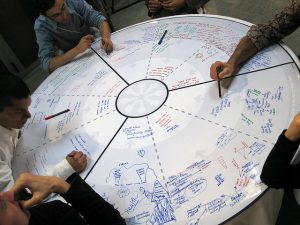 Ørecomm Team to Gather at the University of Coimbra
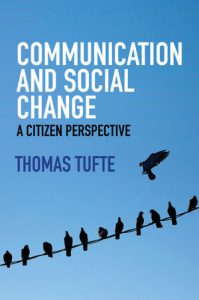 “Communication and Social Change – A Citizen Perspective” Published
 C4D Network to Sum Up Global Communication for Development Practice
 Entering Media and Communication into Development Conferences?
 IAMCR Conference 2016: Communication for Development Highlights
 Glocal Classroom Revisited – Storytelling & Social Change Leicester-Malmö
 I EvalComDev International Conference: Call for Papers
 Looking for Media and Communication in Development Conferences: Devres 2016